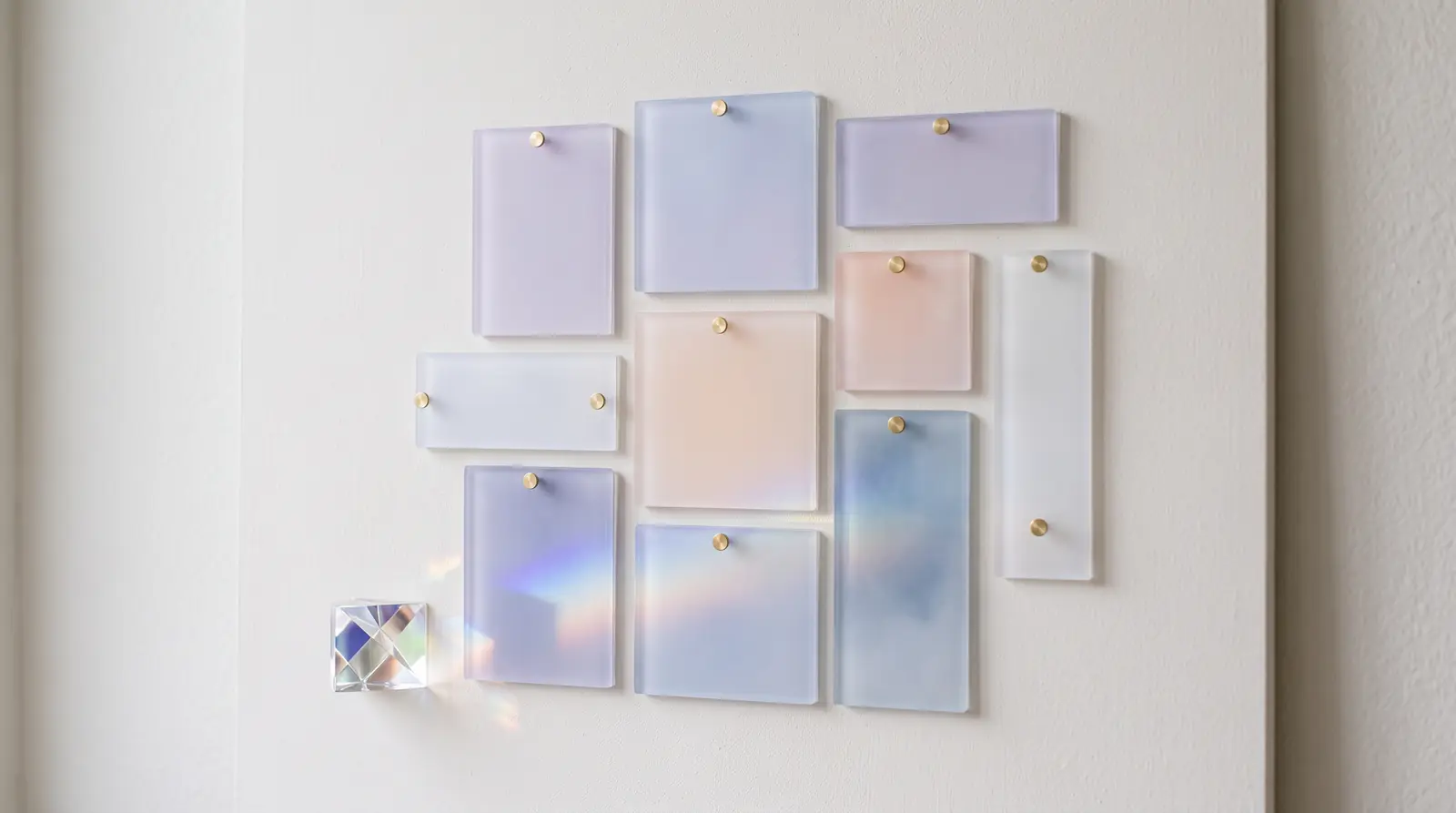
What Mood board means
Mood boards help clients and designers agree on direction before detailed design begins. Use them to study what you like about other work, not to copy it.
Why it matters for your website
Words like 'modern' or 'clean' mean different things to different people. A mood board shows the look you want before anyone designs pages, which cuts down on costly revisions. It also keeps your brand consistent across the site, social posts and print.
Example
A new wine bar gathers photos of warm lighting, deep reds, serif menus and a few websites it likes. The designer uses the board to build a homepage that feels right on the first try.
Tips
- Include examples you dislike too, so the designer knows what to avoid.
- Add short notes explaining what you like about each image.
- Pull from your own photos and products, not just stock imagery.
Common mistakes
- Collecting so many mixed styles that the board has no clear direction.
- Treating the mood board as a final design instead of a starting point.
Questions about Mood board
What is Mood board?
A collection of images, colors, type and examples that captures the look and feel you want.
What should go on a website mood board?
Add colors, fonts, photo styles, textures, icons and screenshots of sites or layouts you like. Notes on the feeling you want, like friendly or premium, help too.
Can I make a mood board for free?
Yes. Free design tools, online whiteboards or even a shared slide deck work well. What matters is that everyone can see and comment on it.